




Smart Food Logistics
Alb-Fils Klinikum, a municipal hospital owned by the Göppingen district in Baden-Württemberg, elevates its patient meal service with Stierlen’s innovative B-Smart and AGV transport system, learns Chris Evans
When Alb-Fils Klinikum opened its new state-of the-art hospital building in Göppingen, Germany, in 2025, the goal was clear: to create one of the most technologically advanced healthcare facilities in the region.
Alongside cutting-edge medical infrastructure and digital systems, the hospital also required a modern, highly efficient meal distribution solution capable of serving hundreds of patients every day.
To achieve this, the hospital partnered with Stierlen, implementing the company’s B-Smart tray system combined with an Automated Guided Vehicle (AGV) transport system — an innovative approach that brings automation, hygiene and precision together in hospital catering.
Alb-Fils Klinikum is a municipal hospital, owned by the Göppingen district in Baden Württemberg, that also serves as an academic teaching hospital affiliated with the University of Ulm. With around 645 beds, including 43 intensive care beds, and approximately 30,000 inpatients and 135,000 outpatients treated each year, the hospital required a robust catering infrastructure capable of delivering consistent meal quality at scale.
According to Michael Tibi, head of catering services at Alb-Fils Klinikum, the move to the new hospital building created the opportunity to rethink foodservice operations from the ground up.
“The main reason for the partnership was the need to implement a highly modern, efficient and hygienically safe foodservice system for the more than 600 beds of the new central hospital,” he explains.
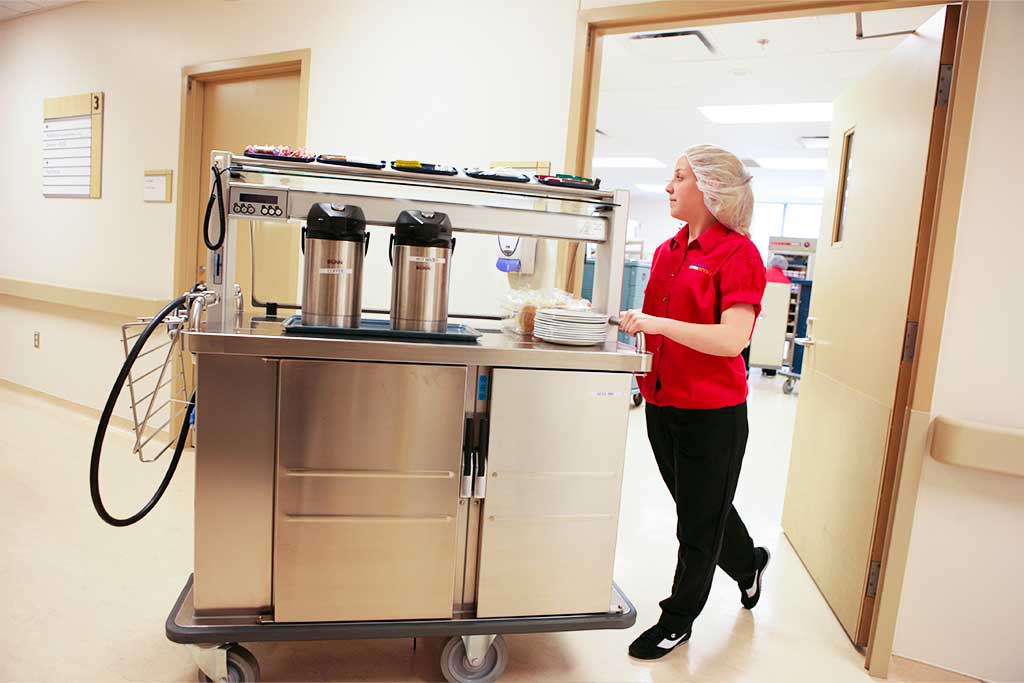
Stierlen was involved early in the planning stages, helping to integrate meal logistics into the hospital’s digital infrastructure. The project ultimately included the installation of B-Smart meal distribution trolleys, docking stations for regeneration on the wards, and integration with the hospital’s automated transport system.
“What makes this project special is the combination of B-Smart with AGV transport to the patient wards and decentralized regeneration in the individual supply rooms,” says Siegfried Hilser, managing director at Stierlen. “The fact that we were able to implement this system in a state-of-the-art new hospital shows that our systems are at the cutting edge.”
Improving logistics
In practice, the system works as an integrated process. Meals are portioned in the central kitchen and placed into insulated B-Smart trolleys with separate hot and cold compartments. These trolleys are then transported through the hospital by AGVs (driverless vehicles), which carry them directly to the correct ward. Once there, they are connected to docking stations that regenerate meals to precise serving temperatures shortly before distribution to patients.
The automation significantly improves logistics while maintaining strict hygiene and food safety standards.
“The shift to fully automated delivery without manual intervention represents a major advancement,” says Tibi. “Automated transport eliminates logistical bottlenecks and human errors while ensuring a fully documented cold and heat chain.”
The B-Smart system itself is designed specifically for cook-chill hospital catering. Its high-performance insulation and precise temperature control allow hot and cold elements of a meal to remain perfectly separated until regeneration. This ensures that soups arrive hot while salads remain fresh, an important factor in patient satisfaction.
Hilser emphasizes that hygiene and durability were also key considerations during the system’s design.
“The trolley is completely welded inside and outside and fully foamed for insulation,” he explains. “There are no openings where moisture can enter, which is important because hospital meal trolleys are washed multiple times every day. This ensures long service life and excellent hygiene.”
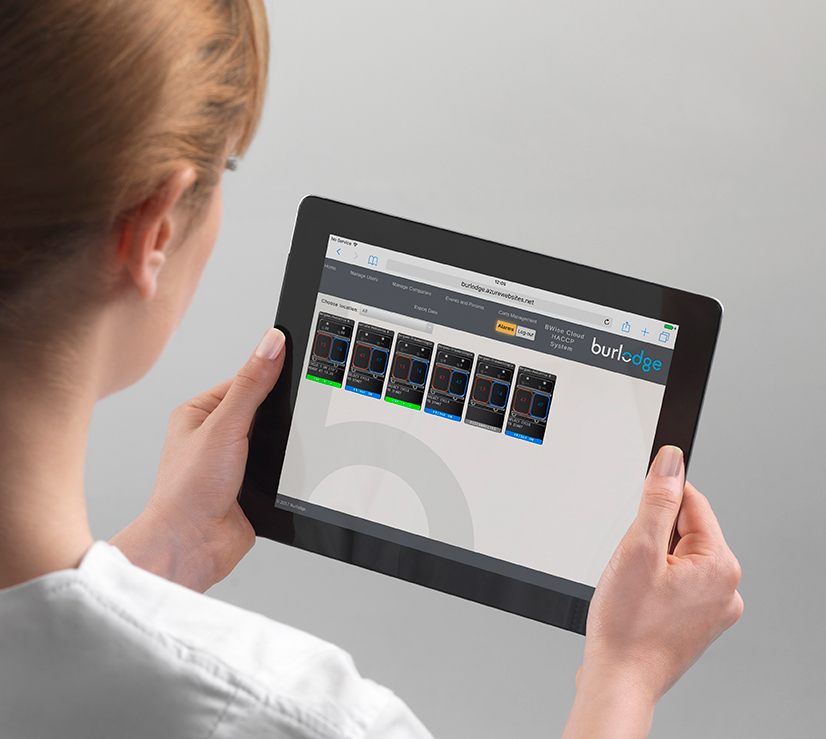
Beyond food quality, the system also delivers clear operational benefits. Automated transport reduces the need for staff to move heavy carts across multiple floors, allowing them to focus more fully on patient care. Digital monitoring also ensures temperatures and food safety data can be tracked and documented throughout the distribution process.
For patients, the benefits are equally clear. “Reliable mealtimes are important for coordinating with medication or therapy schedules,” says Tibi. “Precise regeneration ensures meals arrive exactly as intended, hot food hot; cold food fresh.”
As Alb-Fils Klinikum continues to develop its digital and automated infrastructure, its partnership with Stierlen remains a key component of its long-term strategy.
By combining advanced catering technology with automated logistics, the hospital has created a foodservice system that supports both operational efficiency and patient wellbeing, demonstrating how innovation can transform even the most routine aspects of hospital care.
Pages 78-79, ALIWORLD Magazine, Issue 14, October 2026
Read also

A Smarter Way to Serve
Burlodge’s innovative BSmart Class-e system is supporting nutrition, ergonomics and foodservice efficiency at Centre de Rééducation...

A Week in Toronto
Sue Austin, food production manager at Nottingham University Hospitals NHS trust reflects on her recent trip to Canada, sponsored by...
Food Packaging: a Barrier
Imagine visiting a loved one in the hospital who has just undergone shoulder surgery. With only one arm and hand to use, can they open each...
Most read articles
A Smarter Way to Serve
Burlodge’s innovative BSmart Class-e system is supporting nutrition, ergonomics and foodservice efficiency at Centre de Rééducation...
A Week in Toronto
Sue Austin, food production manager at Nottingham University Hospitals NHS trust reflects on her recent trip to Canada, sponsored by...
Food Packaging: a Barrier
Imagine visiting a loved one in the hospital who has just undergone shoulder surgery. With only one arm and hand to use, can they open each...